Winter Steelhead Season Knocking on the Door

Fresh kings still coming into the Chetco, Smith likey done for the year
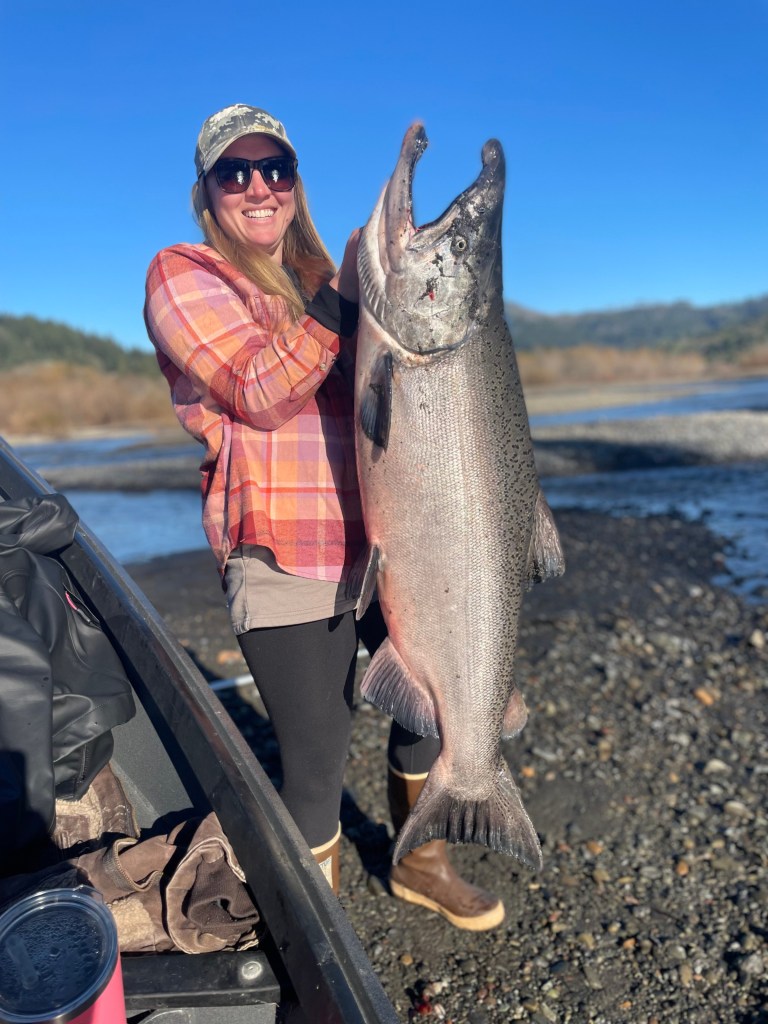
McKinleyville resident Alyssa Brooke Cardoza landed this hefty king salmon over the weekend while fishing the Chetco River. Photo courtesy of Curtis Wilson.

With the late-fall king season all but wrapped up on the coastal rivers, it’s time to turn our attention to winter steelhead, likely the most popular fishery on the North Coast. With the last storm providing plenty of water to all of the rivers, anglers are primed and ready to do battle with the gray ghosts. There’s been a smattering of steelhead caught on most coastal rivers already, but few more good rain events should get the season underway.

With regards to the salmon season, it was definitely one to remember. Or to put it another way, it was much like the old days. The Smith and Eel rivers both saw good returns of kings. There’s also a good number of returning coho to the Eel basin. The Chetco also saw numbers they haven’t seen in some time. And they’re still coming. Schools of big, fresh kings have been moving through the lower river all week. And more and more steelhead are being seen and caught.

But now with more rain in the forecast next week and the calendar saying December – it’s time to get our steelhead on!

Weekend marine forecast
The next couple of days look good before the wind picks up on Saturday evening. As of Thursday, Friday’s forecast is calling for north winds 5 to 10 knots with west waves 6 feet at 12 seconds. Saturday is looking similar, with winds coming out of the north 5 to 10 knots with northwest waves 6 feet at 14 seconds. Winds will strengthen beginning Sunday, coming out of the north 15 to 20 knots with north waves 6 feet at seven seconds and west 9 feet at 14 seconds. These conditions can and will change by the weekend. For an up-to-date weather forecast, visit www.weather.gov/eureka/ or www.windy.com. You can also call the National Weather Service at 443-7062 or the office on Woodley Island at 443-6484.

Weather ahead
According to Eureka’s National Weather Service, the high pressure ridge will build back behind the front that moved through on Thursday and will keep Humboldt mostly dry through the weekend, Northern Humboldt and Del Norte counties could see some light rain this weekend, but it won’t add up to much. A more active weather pattern is developing for later next week that could bring higher rain totals.

Eureka/Trinidad sport crabbing
Sport crabbing continues to be excellent out of Eureka. Boats fishing either side of the entrance in roughly 100 feet of water were averaging 10 to 15 keepers on an overnight soak. Conditions look good through the Saturday before the wind and seas pick up on Sunday. Up in Trinidad, the crabbing has slowed down. Anglers are having to go a little further outside the harbor area to get their limits.

Shelter Cove update
We had a really good week of weather at reports Jake Mitchell of Sea Hawk Sport Fishing. He said, “We spent the last few days of the nearshore rockfish season up around Rodgers Break for quick limits each day. Once it switched back to deep water, we fished outside the Hat, where the fishing was pretty decent as well. Crabbing is still going strong. It’s slowed down a little since the start, but still getting easy limits.”

Young deckhand Mason Mitchell holds a nice yellowtail rockfish caught out of Shelter Cove while fishing with his dad Jake. Photo courtesy of Jake Mitchell/Sea Hawk Sport Fishing

Mad River Steelhead Reward Program Returns for 2024-25
For the Mad River steelhead fishery in the upcoming 2024-25 season, the California Dept. of Fish and Wildlife (CDFW) will once again attach reward tags to a small subset of hatchery-origin (i.e., adipose-clipped) adult steelhead upon their return to freshwater. This is in effort to estimate the steelhead harvest on the Mad River. According to John Deibner-Hanson, a Northern Region Environmental Scientist for CDFW, a number of fish will be captured in the lower river using tangle nets and affixed with spaghetti tags worth $20, $50 or $100 rewards. Once the tags are applied on their backs behind the dorsal fin, the fish will be released.

Upon capturing a reward tag, anglers will need to follow one of the methods outlined below to answer a series of questions about how the tag was acquired (e.g., caught on fish, found on dead fish, found on bank). Anglers will have until April 15, 2025 to report tags and claim rewards, after which reward tags from this season will expire. To attain accurate harvest estimates, we must assume 100% tag return rates on harvested steelhead, so getting the word out for our tagging program will be vital to its success.

There are three ways an angler may report their tag for reward:

  1. Scan the QR code posted on message boards and signage around the river or carried by CDFW creelers
  2. Visit: https://forms.office.com/g/jjWnw9t7Ss
  3. Return the tag to CDFW at: 50 Ericson Ct., Arcata, CA

Using options 1 and 2 above, anglers will not submit the physical tag, only needing to provide the unique tag number and answering the accompanying questions online. For this reason, anglers are strongly urged to retain the tag after submittal until all rewards have been claimed, as only one reward will be paid for each uniquely numbered tag. For questions, please email MadRiverRewards@wildlife.ca.gov.

The Rivers:
As of Thursday, all North Coast rivers subjected to low-flow fishing closures were open to fishing. This includes the Mad, main stem Eel, South Fork Eel, Redwood Creek, Van Duzen and Smith rivers. The Department of Fish and Game will make the information available to the public by a telephone recorded message updated, as necessary, no later than 1 p.m. each Monday, Wednesday, and Friday as to whether any stream will be closed to fishing. The rivers can be opened at any time. The low flow closure hotline for North Coast rivers is 707-822-3164. NOTE: The main stem Eel from the South Fork to Cape Horn Dam, the Mad River from the mouth to 200 yards upstream and the Mattole River will be closed until January 1, 2025. More information can be found here.

Mad
The Mad was just above 700 cfs Thursday and dropping slowly. The water is turning green with about a foot of visibility. Should be in excellent shape by the weekend. Current river conditions: cdec.water.ca.gov/river/madStages.html

Main stem Eel
Flows were just under 5,000 cfs Thursday morning as it continues to drop. If it continues to drop as predicted, it will be plenty fishable by the weekend. Flows will be a little high, but the color should be good. Current river conditions: cdec.water.ca.gov/river/eelStages.html

South Fork Eel
The South Fork is in perfect shape, running at 1,750 cfs at Sylvandale Thursday. It’s dropping slowly, and will be in prime shape this weekend. It’s a little early for big numbers of steelhead, but there could be some late-arriving kings and coho around. Current river conditions: cdec.water.ca.gov/river/eelStages.html

Van Duzen
Like the Sf Eel, the Van Duzen is fishable, but it’s starting to get low. As of Thursday, flows were just above 200 cfs. With no rain in the immediate forecast, it could close after the weekend. Current river conditions: cdec.water.ca.gov/river/eelStages.html

Smith
The Smith is low and clear, registering 7.5 feet at the Jed Smith gauge Thursday morning. The salmon season is all but wrapped up, and some rain is needed to bring in the steelhead. A few were caught last week. Current river conditions: cdec.water.ca.gov/river/smithStages.html

Chetco/Elk/Sixes
“The Chetco had a surprising number of bright kings on Thanksgiving weekend, with several fish over 40 pounds caught, along with a 52-pounder,” said Andy Martin of Wild Rivers Fishing. “Plug fishing has been good on the lower river. A handful of steelhead also have been caught, both by plunkers and boaters side-drifting. While rivers to the north are low and clear, the Chetco still had plenty of flow and color on Tuesday.”

Brookings rockfish update
According to Martin, the lingcod and rockfish action has been good out of the Port of Brookings. “Recreational crabbing opened back up Wednesday after two consecutive tests indicated levels of domoic acid were below the safety threshold. Calm conditions are expected through the week, but choppy seas are possible this weekend.” 

Kenny Priest operates Fishing the North Coast, a fishing guide service out of Humboldt specializing in salmon and steelhead. Find it on Facebook, Instagram, YouTube and fishingthenorthcoast.com. For up-to-date fishing reports and North Coast river information, email kenny@fishingthenorthcoast.com.

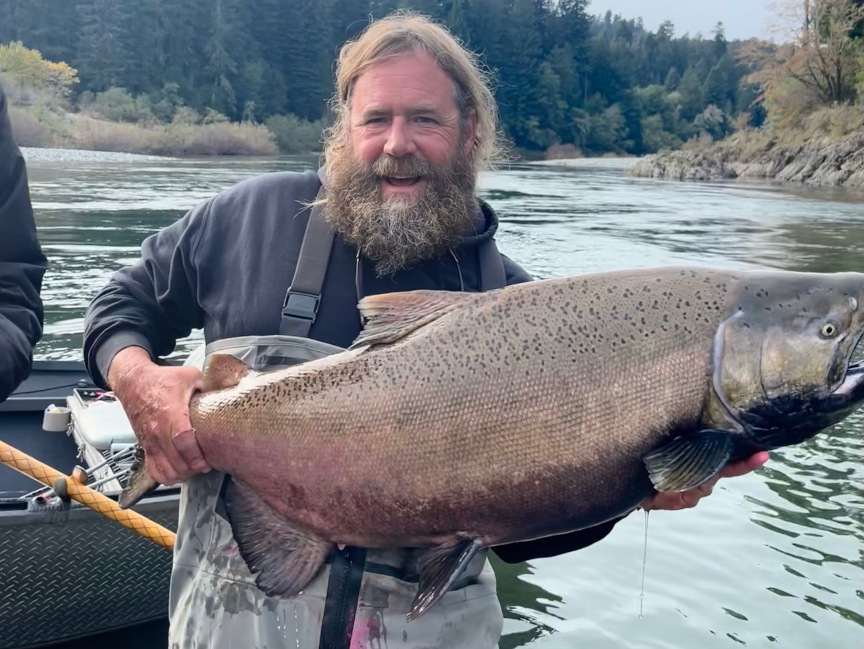
‘Offshore Only’ Rockfish Season Begins Dec. 1

Nearshore season ends Saturday

Redding resident Tyler Somonis holds a nice vermilion rockfish caught Wednesday while fishing out of Crescent City. The nearshore rockfish season will close after Saturday. Photo courtesy of Crescent City Fishing/Steve Huber’s Guide Service.

Following a month of mostly unfishable conditions, the month of December will once again force rockfish anglers back to deep water. With the opening of sport Dungeness crab season and rockfish within reach, hopes were high for a November full of combo trips. But Mother Nature had other plans and failed to provide many fishable days. The past few days have been the best we’ve seen all month.

But now, starting Sunday Dec. 1 within the Northern Management Area, which includes ocean waters between 42°00’ N. latitude (CA-OR Border) and 40°10′ N. latitude (near Cape Mendocino), fishing for rockfish will only be allowed seaward of the 50-fathom boundary line, and only shelf rockfishslope rockfish and lingcod may be retained. Take and possession of nearshore rockfish, cabezon and greenling are prohibited during the offshore fishery.

In the Mendocino Management Area, which includes Shelter Cove and Fort Bragg, all the seasons are the same as the Northern Management Area. The only change is the daily bag limit is two vermilion rockfish per person.

Divers and shore-based anglers will continue to be exempt from boat-based season restrictions affecting rockfish and other federally managed groundfish, which allows for year-round diving and shore-based angling, in line with current regulations. Rockfish season for boat anglers will close statewide after Dec. 31.

Regulation change reminder for 2024
Changes to the sub-bag limits within the 10-fish daily Rockfish, Cabezon, Greenling (RCG) complex bag and possession limit include a new statewide ban on possession of quillback rockfish. Also new in 2024 is the mandatory possession of descending devices . No person shall take or possess any federal groundfish from any boat or other floating device in ocean waters without having a descending device in possession and available for immediate use to assist in releasing rockfish to the depth of capture.

Daily bag limit
In the Northern Management Area, the RCG complex includes all species of rockfishes, Cabezon and Greenlings. You are allowed 10 fish in combination per person EXCEPT:

Minimum size for Cabezon is 15 inches total length and for Kelp and/or rock greenlings it’s 12 inches.

The daily bag limit of lingcod remains at two per person and they must be 22 inches in length. The take and possession of cowcod, bronzespotted rockfish and yelloweye rockfish is prohibited statewide. Petrale sole and starry flounder can be retained year-round at all depths with no size limit.

Important reminder:
In waters where groundfish species or species groups are closed to take or possession but authorized for take or possession in other areas, those species or species groups may be possessed aboard a vessel that is anchored, drifting, or transiting in or through that closed area. While anchored, drifting, or transiting through an area closed to take or possession of these groundfish species or species groups, no gear may be deployed other than for the take of crustaceans with hoop nets, Dungeness crab traps, and dip nets.

For more information about recreational groundfish regulations within the northern management area, visit wildlife.ca.gov/Fishing/Ocean/Regulations/GroundfishSummary#north

Weekend weather and marine forecast
According to the Eureka’s National Weather Service, high pressure will continue to build over the area, bringing mostly clear skies and chilly overnight temperatures. By early next week some warmer valleys could see temperatures in the 70’s. There is no clear end in sight for this pattern yet. Ridging to will likely continue to dominate the west coast for the next seven days.

The weekend marine forecast is looking good for offshore crabbing and/or rockfish. As of Friday, Saturday’s forecast is calling for northeast winds up to 5 knots with northwest waves 3 feet at seven seconds and 2 feet at 12 seconds. Sunday looks similar, with northwest waves 2 feet at 11 seconds and 5 feet at 18 seconds. Conditions early next week also look favorable. These conditions can and will change by the weekend. For an up-to-date weather forecast, visit www.weather.gov/eureka/ or www.windy.com. You can also call the National Weather Service at 443-7062 or the office on Woodley Island at 443-6484.

Eureka/Trinidad sport crabbing
After the storms, boats were finally able to get back on the water Tuesday. And the reports were excellent with boats reporting easy limits of big crab. Boats fishing either side of the entrance in roughly 100 feet of water were averaging 10 to 15 keepers on an overnight soak. Conditions look good through the weekend.

Sport crabbers are also doing well in Trinidad, averaging 10 to 12 per trap for an overnight soak.  The quality has been excellent. Expect the beach to be crowded over the holiday weekend and the last few days of the inshore rockfish season.

Shelter Cove update
“We finally got back on the water Tuesday, and the fishing was excellent,” said Jake Mitchell of Sea Hawk Sport Fishing. “We had limits of rockfish, lingcod, and crab and back at the dock by noon. Rogers Break has been good for rockfish and lingcod, while we’re crabbing off Black Sands Beach. On an overnight soak, we’re getting 10 to 20 keepers per pot.”

The Rivers:
As of Friday, all North Coast rivers subjected to low-flow fishing closures were open to fishing. This includes the Mad, main stem Eel, South Fork Eel, Redwood Creek, Van Duzen and Smith rivers. The Department of Fish and Game will make the information available to the public by a telephone recorded message updated, as necessary, no later than 1 p.m. each Monday, Wednesday, and Friday as to whether any stream will be closed to fishing. The rivers can be opened at any time. The low flow closure hotline for North Coast rivers is 707-822-3164. NOTE: The main stem Eel from the South Fork to Cape Horn Dam, the Mad River from the mouth to 200 yards upstream and the Mattole River will be closed until January 1, 2025. More information can be found here.

Mad
The Mad is dropping quickly and should be at a fishable height by mid-week. There should be some early steelhead making their way into the lower river this week. Current river conditions: cdec.water.ca.gov/river/madStages.html

Main stem Eel
Flows were down to 12,800 cfs Friday as it continues to drop. With a mostly dry week forecasted, it could be fishable by next weekend. Current river conditions: cdec.water.ca.gov/river/eelStages.html

South Fork Eel
The South Fork was just above 3,000 cfs Friday and should be fishable by the first of the week. It’s a little early for steelhead, but there could be some late-arriving salmon around. Current river conditions: cdec.water.ca.gov/river/eelStages.html

Van Duzen
Like the Sf Eel, the Van Duzen should be fishable by the early next week. As of Friday, flows were right around 800 cfs. Current river conditions: cdec.water.ca.gov/river/eelStages.html

Smith
The Smith was just above 9.5 feet at the Jed Smith Park Friday morning. The river is forecast to drop slowly through the week. The salmon run is mostly done for the season, and we should start to see a few early steelhead show up. Current river conditions: cdec.water.ca.gov/river/smithStages.html

Nov. 29 and 30 free fish days in Oregon
The Oregon Department of Fish and Wildlife is waiving all fishing licensing requirements on the Friday and Saturday after Thanksgiving to encourage people to experience fishing with friends and family during the long holiday weekend. All fishing, crabbing, and clamming in Oregon will be free for both Oregon residents and non-residents. No licenses, tags or endorsements are needed on those days, but all other fishing regulations apply. Visit https://www.dfw.state.or.us/news/2024/11_Nov/111324.asp for more info.

Chetco/Elk/Sixes
The Elk River was back in shape on Tuesday, and fresh hatchery kings were spread throughout the river reports Andy Martin of Wild Rivers Fishing. “The Elk River could be low by the end of the week,” said Martin. “The Chetco remains blown out but should fish by the end of the week. Steelhead season opens Dec. 1 on the Chetco, Elk and Sixes. The Chetco also will open to fishing, steelhead only, for the first time this fall above Nook Bar.”

Brookings rockfish update
According to Martin, the ocean out of Brookings calmed down this week, with flat conditions expected this weekend. Lingcod fishing was good before the latest storms.

Kenny Priest operates Fishing the North Coast, a fishing guide service out of Humboldt specializing in salmon and steelhead. Find it on FacebookInstagramYouTube and fishingthenorthcoast.com. For up-to-date fishing reports and North Coast river information, email kenny@fishingthenorthcoast.com.

Atmospheric Rivers Put an End to Late-Fall King Season

Guide Sam Stover of Brookings Fishing Charters holds a hefty Smith River king that was released Saturday after smacking a 5.0 MagLip.

This week’s report will be mostly about water, because there’s a lot more water at the moment than fishing opportunities. In case you haven’t heard, the North Coast is smackdab in the middle of some severe storms that are taking aim at the coast with heavy winds and copious amounts of rain. Several rivers are forecast to exceed monitor and approach flood stage in the coming hours. These high flows will signal the end of the late fall salmon fishing season on the Eel and Smith rivers, and make available spawning habitat that wouldn’t normally be accessible in drier years. With both rivers seeing strong returns of kings, coupled with an abundance of prime spawning habitat, this really bodes well for the future.  While we kick the kings up the tributaries, we now begin to think about winter steelhead. November is typically a little early to see big numbers – but it won’t be long. My hunch is after a few more good storms over the next couple weeks, the uber popular winter steelhead run will be afoot.

Weather ahead
According to the Eureka’s National Weather Service, the atmospheric river storm system will continue to bring prolonged moderate to heavy rainfall tonight through Friday. “An additional 4 to 6 inches with isolated 8 inches is forecast Wednesday night through Friday, with the bulk falling Thursday through Thursday Night. After the passage of the secondary cyclone Thursday, most ensemble guidance shifts the parent trough westward on Friday, which would put Northwestern California in the cold sector and shut off our subtropical moisture tap, marking a change from persistent moderate rainfall to showery rainfall. Rain will likely continue during this period through the weekend, however be generally less, and with more sparse coverage.”

Sport crab trap restrictions stay put, delays for Commercial
In a press release issued Thursday, the California Department of Fish and Wildlife (CDFW) is continuing the temporary recreational crab trap restriction from the Sonoma/Mendocino county line to Lopez Point (Fishing Zones 3 and 4) due to presence of humpback whales and the potential for entanglement from trap gear. They also continued the delay for the recreational opener in the northern portion of Fishing Zone 1 (from the CA/OR border to the southern boundary of the Reading Rock State Marine Reserve) due to unhealthy levels of domoic acid.

“CDFW is continuing the Commercial Dungeness crab fishery delay in Fishing Zones 3-6 due to the presence of humpback whales and risk of entanglement. This delay is necessary due to the high number of entanglements that have occurred this year, four of which involved the commercial fishery. The delay will allow whales to continue their migration to winter breeding grounds and away from the fishing grounds, thereby reducing entanglement risk.  

Given the high abundance of whales and entanglements that have occurred this year, CDFW will assess entanglement risk again in early December. It is expected that the next risk assessment will take place on or before Dec. 5, 2024, at which time Director Bonham will re-evaluate the temporary recreational crab trap restrictions and statewide commercial fishery delay.” More information can be found here.

Mad River Steelhead Reward Program Returns for 2024-25
For the Mad River steelhead fishery in the upcoming 2024-25 season, the California Dept. of Fish and Wildlife (CDFW) will once again attach reward tags to a small subset of hatchery-origin (i.e., adipose-clipped) adult steelhead upon their return to freshwater. This is in effort to estimate the steelhead harvest on the Mad River. According to John Deibner-Hanson, a Northern Region Environmental Scientist for CDFW, a number of fish will be captured in the lower river using tangle nets and affixed with spaghetti tags worth $20, $50 or $100 rewards. Once the tags are applied on their backs behind the dorsal fin, the fish will be released.

Upon capturing a reward tag, anglers will need to follow one of the methods outlined below to answer a series of questions about how the tag was acquired (e.g., caught on fish, found on dead fish, found on bank). Anglers will have until April 15, 2025 to report tags and claim rewards, after which reward tags from this season will expire. To attain accurate harvest estimates, we must assume 100% tag return rates on harvested steelhead, so getting the word out for our tagging program will be vital to its success.

There are three ways an angler may report their tag for reward:

  1. Scan the QR code posted on message boards and signage around the river or carried by CDFW creelers
  2. Visit: https://forms.office.com/g/jjWnw9t7Ss
  3. Return the tag to CDFW at: 50 Ericson Ct., Arcata, CA

Using options 1 and 2 above, anglers will not submit the physical tag, only needing to provide the unique tag number and answering the accompanying questions online. For this reason, anglers are strongly urged to retain the tag after submittal until all rewards have been claimed, as only one reward will be paid for each uniquely numbered tag. For questions, please email MadRiverRewards@wildlife.ca.gov.

The Rivers:
As of Thursday, all North Coast rivers subjected to low-flow fishing closures were open to fishing. This includes the Mad, main stem Eel, South Fork Eel, Redwood Creek, Van Duzen and Smith rivers. The Department of Fish and Game will make the information available to the public by a telephone recorded message updated, as necessary, no later than 1 p.m. each Monday, Wednesday and Friday as to whether any stream will be closed to fishing. The rivers can be opened up at any time. The low flow closure hotline for North Coast rivers is 707-822-3164. NOTE: The main stem Eel from the South Fork to Cape Horn Dam, the Mad River from the mouth to 200 yards upstream and the Mattole River will be closed until January 1, 2025. More information can be found here.

Mad
The Mad is forecast to reach minor flood stage Friday morning, with flows expected to reach nearly 34,000 cfs. More rain is in the forecast next week, fishable conditions won’t be coming any time soon. Current river conditions: cdec.water.ca.gov/river/madStages.html

Main stem Eel
Flows were over 62,000 cfs Thursday and rising. It’s predicted to peak at over 252,000 cfs Friday afternoon, which surpasses action/monitor levels. It’s forecast to be down to 33,000 cfs by early next week, but with more rain it’s not going to drop into fishing shape in the near future. Current river conditions: cdec.water.ca.gov/river/eelStages.html

South Fork Eel
The South Fork was peaking Thursday morning at roughly 24,000 cfs, but that will be short-lived. With another four inches or rain in the forecast, it’s predicted to surpass action/monitor stage Friday morning, peaking at over 59,000 cfs. It will need a week of dry weather before it’s close to fishable. Current river conditions: cdec.water.ca.gov/river/eelStages.html

Van Duzen
Like the rest of the coastal rivers, the Van Duzen is predicted to surpass monitor stage. Flows Thursday morning were 16,000 cfs, with peak flows expected to reach 33,350 cfs early Friday morning. Current river conditions: cdec.water.ca.gov/river/eelStages.html

Smith
The Smith is likely the only river on the coast that is actually on the drop. Flows were just under 30,000 cfs Thursday, with the next rise forecast for Friday morning. It’s predicted to peak Friday at over 46,000 cfs Friday, and will be on the drop through the weekend. Depending on how much rain falls next week, it could drop into fishable shape at some point. The salmon run is likely done for the season and we should start to see a few early steelhead show up. Current river conditions: cdec.water.ca.gov/river/smithStages.html

Nov. 29 and 30 free fish days in Oregon
The Oregon Department of Fish and Wildlife is waiving all fishing licensing requirements on the Friday and Saturday after Thanksgiving to encourage people to experience fishing with friends and family during the long holiday weekend. All fishing, crabbing and clamming in Oregon will be free for both Oregon residents and non-residents. No licenses, tags or endorsements are needed on those days, but all other fishing regulations apply. Visit https://www.dfw.state.or.us/news/2024/11_Nov/111324.asp for more info.

Chetco/Elk/Sixes
“Salmon fishing was decent on the Chetco and Elk, and good on the Sixes River before the latest series of storms,” said Andy Martin of Wild Rivers Fishing. “The Chetco will now likely be blown out until at least Thanksgiving Day, with a crest of more than 40,000 cfs expected. Snow fell at higher elevations before the big storm hit, so that could add to even more runoff. The average size of the kings on the Chetco, Elk and Sixes has been above recent averages. The first couple steelhead of the season also have been released on the lower Chetco.” 

Kenny Priest operates Fishing the North Coast, a fishing guide service out of Humboldt specializing in salmon and steelhead. Find it on Facebook, Instagram, YouTube and fishingthenorthcoast.com. For up-to-date fishing reports and North Coast river information, email kenny@fishingthenorthcoast.com.
Smith and Chetco Best Bets for the Weekend

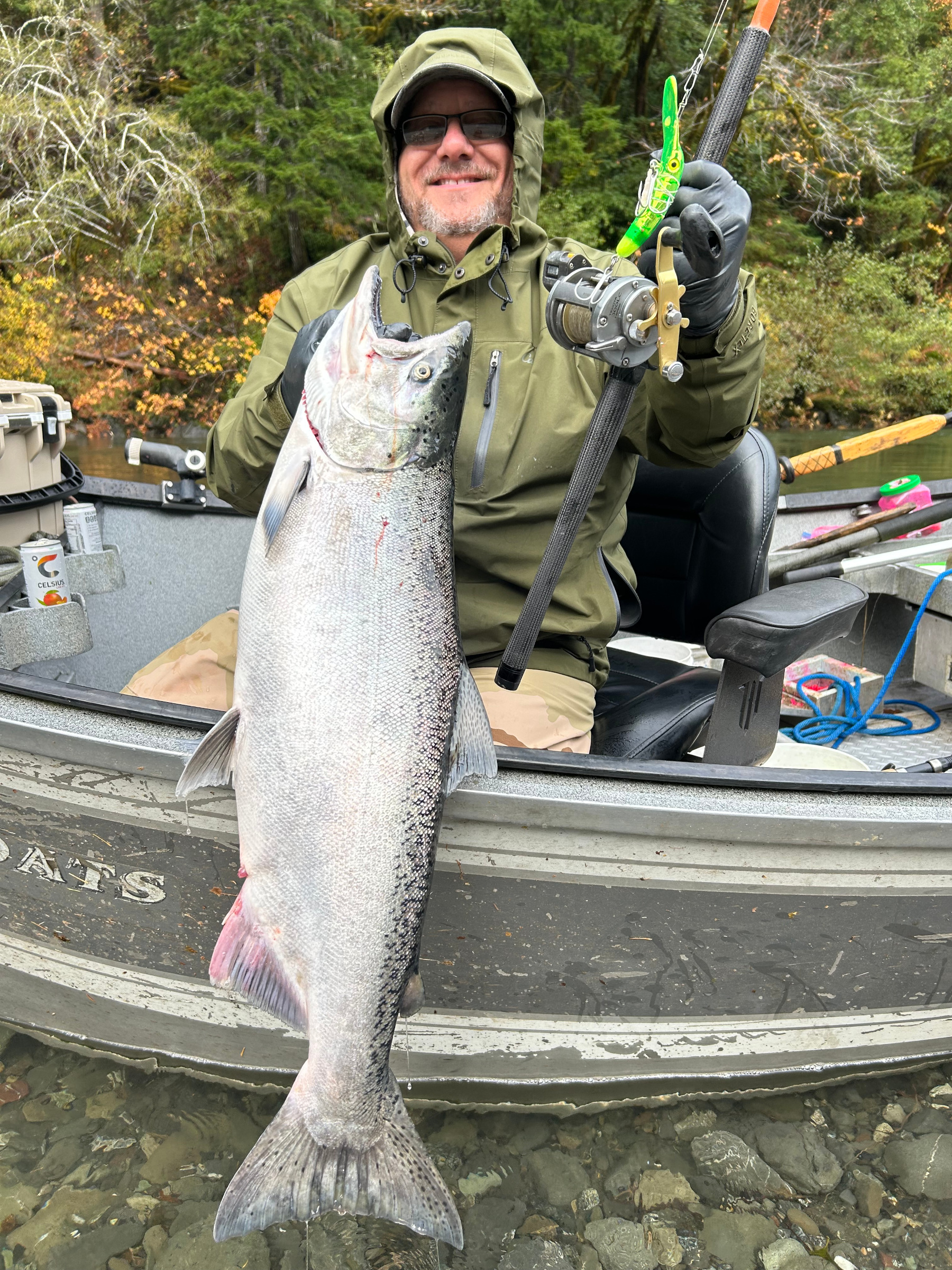
John Curry of Reno with a chrome-bright Chetco king caught Tuesday on a 5.0 MagLip with guide Andy Martin.

If you haven’t gotten in on the late fall king action on the coast, this is your weekend to do it. Not only are the river conditions lining for both the Smith and Chetco, it’s getting towards the end of the run. The rain earlier in the week shot both rivers well above projections, and by the weekend they should be in really good shape. If the projections are correct, the Smith could be clearing, but still at a very fishable height and flow. The Chetco blew out on Wednesday, but will come around by the weekend. It may start off a little high Saturday, but by Sunday it should be prime. Another small bump in flows is predicted for Sunday afternoon, which should keep both rivers humming along. Here locally, the main stem Eel could remain fishable this weekend, depending on how dirty the creeks get. It’s predicted to peak Friday at just over 1,600 cfs. That could be a good option if it doesn’t muddy up. The Mad did just that Thursday afternoon, and was still rising. It will likely be off color for the weekend.

Weather ahead
According to the US National Weather Service Eureka, rain will continue through Thursday, with up to a .25 inch predicted. Rain will taper off by Friday morning and we should remain dry through most of Saturday. Rain is forecast to return early Sunday morning and will persist through the night. Rainfall totals from Saturday through Monday morning are anticipated to be between a .5 and 1 inch in Humboldt and up to 2 inches in the Smith basin.

Weekend Marine Forecast
Ocean conditions look to be improved by Saturday, with the south wind returning by Sunday. Saturday’s forecast is calling for east winds 5 to 10 knots with north waves four feet at 5 seconds and northwest seven feet at 12 seconds. Sunday is looking a little worse, with winds out of the south 10 to 15 knots and southwest waves four feet at 5 seconds and northwest six feet at 11 seconds. These conditions can and will change by the weekend. For an up-to-date weather forecast, visit www.weather.gov/eureka/ or www.windy.com. You can also call the National Weather Service at 443-7062 or the office on Woodley Island at 443-6484.

Sport crab fishing update
Crabbing has been good when the boats can get offshore out of Eureka. Both sides of the entrance have been fishing well and averaging roughly 10 to 15 keepers per pot. The crabs are reportedly in really good shape, with some nice jumbos in the mix. Ocean conditions don’t look good for the weekend, and even worse early next week. Crabbing inside Humboldt Bay has been slow.

Shelter Cove update
“We had some good weather last week and took advantage by running north to Rodgers Break for some excellent rockfish and ling cod action,” said Jake Mitchell of Sea Hawk Sport Fishing. “Crabbing has been excellent as well, and they’re nice and full. There’s still some albacore around and boats did fairly well on them 20 miles out last week. We even ran out Friday afternoon and landed 21. No one has been out since then due to weather, but the water still looks good though.”

Brookings update
According to Andy Martin of Brookings Fishing Charters, ocean fishing is very good out of Brookings on calm weather days, which are few and far between right now. He said, “Lingcod are already in spawning mode, while rockfish are schooled up over shallow reefs. Big swells have kept boaters at the docks for the most part.”

The Rivers:
As of Thursday, all North Coast rivers subjected to low-flow fishing closures, including the Smith, the main stem Eel, South Fork Eel, Mad, Redwood Creek and Van Duzen are open to angling. The South Fork Eel will be closed beginning Friday according to the CDFW hotline. The Department of Fish and Game will make the information available to the public by a telephone recorded message updated, as necessary, no later than 1 p.m. each Monday, Wednesday and Friday as to whether any stream will be closed to fishing. The rivers can be opened up at any time. The low flow closure hotline for North Coast rivers is 707-822-3164. NOTE: The main stem Eel from the South Fork to Cape Horn Dam, the Mad River from the mouth to 200 yards upstream and the Mattole River will be closed until January 1, 2025.

Mad
The Mad was still rising and starting to color up Thursday morning and was headed above projections. It should begin to drop Friday, but will likely be too dirty for the weekend. Minimum flow: 200 cfs at the gauging station at the Highway 299 bridge. cnrfc.noaa.gov/graphicalRVF.php?id=ARCC1

Main Eel
Forecasted to reach 1,200 cfs Friday morning. The color was good Wednesday when it opened and some salmon were caught. Minimum Flow: 350 cubic feet per second at the gauging station near Scotia.
cnrfc.noaa.gov/graphicalRVF.php?id=SCOC1

South Fork Eel
Flows are predicted to peak at around 485 cfs Thursday afternoon. Forecast for a quick drop and will be closed to angling Friday. Minimum flow: 340 cfs at the gauging station at Miranda. cnrfc.noaa.gov/graphicalRVF.php?id=MRNC1

Van Duzen
The Van Duzen was peaking just above 700 cfs Thursday afternoon and will drop quickly. Flows are predicted to stay above the threshold before the next storm hits Sunday morning. Minimum flow: 150 cfs at the gauging station near Grizzly Creek Redwoods State Park.
cnrfc.noaa.gov/graphicalRVF.php?id=BRGC1

Smith
The Smith went well over predictions and peaked at just under 16 feet on the Jed Smith gauge Wednesday evening. With very little rain the next three days, it will drop quickly. It’s forecast to be down to 8.5 feet by Sunday morning when the rain returns. Minimum flow: 600 cfs at the Jedediah Smith State Park gauging station. cnrfc.noaa.gov/graphicalRVF.php?id=CREC1

Nov. 29 and 30 free fish days in Oregon
The Oregon Department of Fish and Wildlife is waiving all fishing licensing requirements on the Friday and Saturday after Thanksgiving to encourage people to experience fishing with friends and family during the long holiday weekend. All fishing, crabbing and clamming in Oregon will be free for both Oregon residents and non-residents. No licenses, tags or endorsements are needed on those days, but all other fishing regulations apply. Visit https://www.dfw.state.or.us/news/2024/11_Nov/111324.asp for more info.

Chetco/Elk/Sixes
“Heavy rain blew out the Chetco, Elk and Sixes rivers Wednesday morning,” said Andy Martin of Wild Rivers Fishing. “The Chetco was low and clear prior to the storm, with fair fishing for late-season kings. New fish should move up with the storm. The Elk and Sixes were too low for drift boats. A few boats drifted the Sixes on Tuesday with good results. Good conditions are expected on all three rivers this weekend. The Elk should have big numbers of hatchery fish, based on results of the ocean bubble season off of Port Orford.”

Kenny Priest operates Fishing the North Coast, a fishing guide service out of Humboldt specializing in salmon and steelhead. Find it on Facebook, Instagram, YouTube and fishingthenorthcoast.com. For up-to-date fishing reports and North Coast river information, email kenny@fishingthenorthcoast.com.
Low-Flow River Information for the North Coast – 2024/2025


Low Flow River Closures begin Sept. 1 and run through April 30, 2025.
North Coast rivers that are regulated by low flow closures, including the Eel River, Mad River, Mattole River, Redwood Creek, Smith River and Van Duzen River will begin angling restrictions on September 1st, and run through April 30th 2025. . As a reminder, in 2022, a low-flow angling restriction was added to the section of the Eel River from the mouth to Fulmor Road (Eel estuary) at its paved junction with the south bank of the Eel River. When a low-flow closure occurs in this section of the Eel, it will be closed to hook-and-line fishing; other legal fishing methods are allowed during this timeframe. The Department of Fish and Game will make the information available to the public by a telephone recorded message updated, as necessary, no later than 1 p.m. each Monday, Wednesday and Friday as to whether any stream will be closed to fishing. The rivers can be opened up at anytime. Rivers will not automatically open to fishing once minimum flows are reached. The low flow closure hotline for North Coast rivers is (707) 822-3164. NOTE: The main stem Eel from the South Fork to Cape Horn Dam and the Mattole River will be closed until January 1, 2025.

Section of river that is open to fishing is the main stem Smith River from the mouth of Rowdy Creek to its mouth.

Areas subject to low flow closures:

Mad River: The main stem Mad River from the Hammond Trail Railroad Trestle to Cowan Creek. Minimum flow: 200 cfs at the gauging station at the Highway 299 bridge. The Mad River from the mouth to 200 yards upstream is closed until Jan. 1, 2025.

The main stem Eel River: New in 2022, a low-flow angling restriction was added to the section of the Eel River from the mouth to Fulmor Road at its paved junction with the south bank of the Eel River, Sept. 1 through April 30. The stream flow will be monitored as follows: Minimum Flow: 350 cubic feet per second at the gauging station near Scotia.

The South Fork of the Eel River: The South Fork of the Eel River downstream from Rattlesnake Creek and the Middle Fork Eel River downstream from the Bar Creek. Minimum flow: 340 cfs at the gauging station at Miranda.

Van Duzen River: The main stem Van Duzen River from its junction with the Eel River to the end of Golden Gate Drive near Bridgeville (approximately 4,000 feet upstream of Little Golden Gate Bridge. Minimum flow: 150 cfs at the gauging station near Grizzly Creek Redwoods State Park.

Mattole River: The main stem of the Mattole River from the mouth to Honeydew Creek. Minimum flow: 320 cfs at the gauging station at Petrolia.

Redwood Creek: The main stem of Redwood Creek from the mouth to its confluence with Bond Creek. Minimum flow: 300 cfs at the gauging station near the Highway 101 bridge.

Smith River: The main stem Smith River from the mouth of Rowdy Creek to its confluence with Patrick Creek; the South Fork Smith River from the mouth upstream approximately 1000 ft to the County Road (George Tyron) bridge and Craigs Creek to its confluence with Jones Creek; and the North Fork Smith River from the mouth to its confluence with Stony Creek. Minimum flow: 600 cfs at the Jedediah Smith State Park gauging station.

Low-Flow River Information for the North Coast – 2025/2026

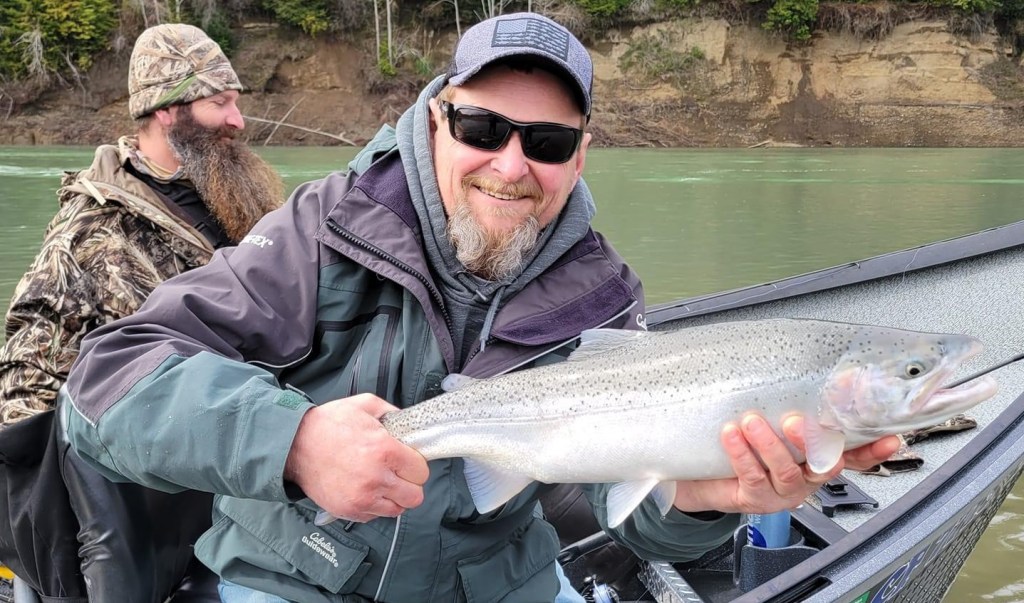
Chris Hall, left, and Raj Desai with a late season steelhead taken on the South Fork Eel River earlier in March. Photo courtesy of Fishing the North Coast


Low Flow River Closures begin Sept. 1 and run through April 30, 2026.
North Coast rivers that are regulated by low flow closures, including the Eel River, Mad River, Mattole River, Redwood Creek, Smith River and Van Duzen River will begin angling restrictions on September 1st, and run through April 30th 2026. As a reminder, in 2022, a low-flow angling restriction was added to the section of the Eel River from the mouth to Fulmor Road (Eel estuary) at its paved junction with the south bank of the Eel River. When a low-flow closure occurs in this section of the Eel, it will be closed to hook-and-line fishing; other legal fishing methods are allowed during this timeframe.

The low flow closure hotline for North Coast rivers is no longer in service. You can now find river openings and closures in real time online at https://wildlife.ca.gov/Fishing/Inland/Low-Flow/North-Coast. The rivers can be opened up at anytime. Rivers will not automatically open to fishing once minimum flows are reached. NOTE: The main stem Eel from the South Fork to Cape Horn Dam, the Mad River from the mouth to 200 yards upstream and the Mattole River will be closed until January 1, 2026.

Section of river that is open to fishing is the main stem Smith River from the mouth of Rowdy Creek to its mouth.

Areas subject to low flow closures:

Mad River: The main stem Mad River from the Hammond Trail Railroad Trestle to Cowan Creek. Minimum flow: 200 cfs at the gauging station at the Highway 299 bridge. The Mad River from the mouth to 200 yards upstream is closed until Jan. 1, 2025.

The main stem Eel River: New in 2022, a low-flow angling restriction was added to the section of the Eel River from the mouth to Fulmor Road at its paved junction with the south bank of the Eel River, Sept. 1 through April 30. The stream flow will be monitored as follows: Minimum Flow: 350 cubic feet per second at the gauging station near Scotia.

The South Fork of the Eel River: The South Fork of the Eel River downstream from Rattlesnake Creek and the Middle Fork Eel River downstream from the Bar Creek. Minimum flow: 340 cfs at the gauging station at Miranda.

Van Duzen River: The main stem Van Duzen River from its junction with the Eel River to the end of Golden Gate Drive near Bridgeville (approximately 4,000 feet upstream of Little Golden Gate Bridge. Minimum flow: 150 cfs at the gauging station near Grizzly Creek Redwoods State Park.

Mattole River: The main stem of the Mattole River from the mouth to Honeydew Creek. Minimum flow: 320 cfs at the gauging station at Petrolia.

Redwood Creek: The main stem of Redwood Creek from the mouth to its confluence with Bond Creek. Minimum flow: 300 cfs at the gauging station near the Highway 101 bridge.

Smith River: The main stem Smith River from the mouth of Rowdy Creek to its confluence with Patrick Creek; the South Fork Smith River from the mouth upstream approximately 1000 ft to the County Road (George Tyron) bridge and Craigs Creek to its confluence with Jones Creek; and the North Fork Smith River from the mouth to its confluence with Stony Creek. Minimum flow: 600 cfs at the Jedediah Smith State Park gauging station.

Salmon stymied by shifting Klamath mouth

Image

Photo Caption: The Klamath River mouth, seen here from the overlook on the north side of the river, has been opening and closing since the weekend, making it difficult for salmon to enter the river. Large swells are predicted for the weekend and hopefully the mouth can blow wide-open allowing what’s left of the fall run to make their way upriver. (Photo courtesy of Sara Borok, Klamath River Environmental Scientist)

Fishing the North Coast
by Kenny Priest/For the Times-Standard

Low Flow closures on North Coast rivers start Tuesday

Along the lines of the ’80s TV commercial for Wendy’s where the old lady shouts, “Where’s the beef?” Klamath salmon anglers have been wondering, “Where’s the salmon?” In truth, no one really knows. What we do know is 11,538 have been harvested below the 101 bridge and another 1,009 have been caught by sport anglers above the bridge. Throw in approximately 54,000 fish that have been harvested by the Yurok tribe and what you’re left with is a lot of missing fish. Sure, there’s a few fish that have squirted through and are now entering tributaries like the Trinity, Shasta, and Scott rivers, but with an in-river return at well over 250,000 predicted, the numbers aren’t adding up. A big part of the problem has been the mouth of the river. Flowing to the south and running narrow and shallow, conditions have been less than ideal for huge pushes of fish to enter the river. And with last week’s storms and big tide swings, it went from bad to worse. Since the weekend, it’s been opening and closing and has created a lake that can be felt all the way to Blakes’ riffle. At the moment, very few fish are entering the lower river and guides are lucky to catch a few a day.

According to Sara Borok, an Environmental Scientist on the Klamath River, we’ve been down this road before. “Back in 2001 we also had a south mouth that hampered the fish coming into the river. “It blew open on September 21 and we had a huge surge of fish pour in,” Borok said. “Although there’s no way to know for sure, my guess it there are still quite a few fish in the ocean waiting for the right conditions to enter.” With big swells again predicted for the weekend, there’s a chance the mouth can finally blow out enough to allow the remaining kings to enter the system and start their journey upriver. Let’s hope so.

Weekend marine forecast
If you’re hoping to fish offshore this weekend, Saturday will be your best bet. South winds are forecasted 5 to 15 knots with swells to 8 feet at 11 seconds.  Sunday isn’t looking as good with south winds to 20 knots and waves out of the west to 14 feet at 14 seconds. For up-to-date weather forecasts, visit http://www.weather.gov/eureka/. You can also call the National Weather Service at (707) 443-7062 or the office on Woodley Island at (707) 443-6484.

HASA meeting
A general membership meeting will be held Oct. 2 at 7 p.m. in Scott McBain’s office at 980 7th Street in Arcata. According to Cliff Hart, President of HASA, discussions will include urgent issues related to Pacific Halibut. “All fisherman and fisherwomen from the North Coast are invited to come and give feedback. We NEED to hear from you. If you can’t make the meeting, please email your comments about the current Pacific Halibut situation and what options you would like to see to: hasa6191@gmail.com. We are in an unfortunate situation where we will lose some halibut fishing. We don’t like any of the options dealt, but we have the ability to recommend. Public comment is open with PFMC, and we may call upon you to write letters and emails.” Hart added. The due date is 10/9/13. For more information, visit http://www.dfg.ca.gov/marine/pacifichalibut.asp

The Oceans:

Eureka
According to Tim Klassen of Reel Steel Sport Fishing, the rough ocean we’ve had this week has kept the boats off the water. “The last fishable day was Sunday and we were able to run to the Cape for Rockfish. Since then, nobody’s been out. Friday and Saturday are looking fishable, but it’s coming back up again on Sunday. Hopefully we’ll be able to go one of those days and drift for halibut as the bite has been pretty good. Last Thursday we were able to limit out our four customers” Klassen said.

Crescent City
Little if any angling is happing offshore out of Crescent City reports Chris Hegne’s of Englund Marine. “We’ve had some pretty rough seas this week and no one’s been out. The weekend isn’t looking much better,” Hegnes added.

Low Flow River Closures begin Oct. 1
North Coast rivers that are regulated by low flow closures, including the Eel River, Mad River, Mattole River, Redwood Creek, Smith River and Van Duzen River will begin angling restrictions on October 1st, except for the Mad River, which went into effect September 1st. The Department of Fish and Game will make the information available to the public by a telephone recorded message updated, as necessary, no later than 1 p.m. each Monday, Wednesday and Friday as to whether any stream will be closed to fishing. The rivers can be opened up at anytime. The low flow closure hotline for North Coast rivers is (707) 822-3164. NOTE: The main stem Eel from the South Fork to Cape Horn Dam and the Mattole River will be closed until January 1, 2014

Areas subject to low flow closures:

Mad River: The main stem Mad River from the Hammond Trail Railroad Trestle to Cowan Creek. Minimum flow: 200 cfs at the gauging station at the Highway 299 bridge.

The main stem Eel River from the paved junction of Fulmor Road with the Eel River to the South Fork Eel River. Minimum flow: 350 cfs at the gauging station near Scotia.

The South Fork of the Eel River downstream from Rattlesnake Creek and the Middle Fork Eel River downstream from the Bar Creek. Minimum flow: 340 cfs at the gauging station at Miranda.

Van Duzen River: The main stem Van Duzen River from its junction with the Eel River to the end of Golden Gate Drive near Bridgeville (approximately 4,000 feet upstream of Little Golden Gate Bridge. Minimum flow: 150 cfs at the gauging station near Grizzly Creek Redwoods State Park.

Mattole River: The main stem of the Mattole River from the mouth to Honeydew Creek.

Minimum flow: 320 cfs at the gauging station at Petrolia.

Redwood Creek: The main stem of Redwood Creek from the mouth to its confluence with Bond Creek. Minimum flow: 300 cfs at the gauging station near the Highway 101 bridge.

Smith River: The main stem Smith River from the mouth of Rowdy Creek to its confluence with Patrick Creek; the South Fork Smith River from the mouth upstream approximately 1000 ft to the County Road (George Tyron) bridge and Craigs Creek to its confluence with Jones Creek; and the North Fork Smith River from the mouth to its confluence with Stony Creek. Minimum flow: 600 cfs at the Jedediah Smith State Park gauging station.

The Rivers:

Lower Klamath
According to Mike Coopman of Mike Coopman’s Guide Service, with the mouth opening and closing since the weekend, very few fish are coming in. The big swells aren’t helping much either,” Coopman said.

Alan Borges of Alan’s Guide Service, who’s also working the lower river, reports guides are still struggling to catch fish in any numbers. “The ones we are catching are fresh with sea lice. Hopefully the ocean calms a bit and we can truly see if there are any good numbers of fish left to come in,” Borges added.

Lower Trinity
Curt Wilson of Curt Wilson Fishing Guides reports the rain and fluctuating flows brought a good amount of fish up the Trinity early this week. “The last few days, steelhead have taken over the show around the Willow Creek area. It seems as we are finally seeing the lack of kings we have been hearing about down low really catch up with us. Hopefully a few more decide to show up. The Willow Creek weir counted 140 fish on Tuesday, but most of them were steelhead,” Wilson added.

Find “Fishing the North Coast” on Facebook for up-to-date fishing reports and North Coast river information. Questions, comments and photos can be emailed to kenny@fishingthenorthcoast.com.